
The Nuiances Of What Is Rice
페이지 정보
작성자 Shawnee 작성일 26-03-27 16:28 조회 49 댓글 0본문
Roughly one-half of the world population, including nearly all of East and Southeast Asia, is wholly dependent upon rice as a staple meals; 95 % of the world’s rice crop is eaten by humans. Roughly one-half of the world inhabitants, together with just about all of East and Southeast Asia, is wholly dependent upon rice as a staple meals. Greater than ninety p.c of the world’s rice is grown in Asia, principally in China, India, Indonesia, and Bangladesh, with smaller amounts grown in Japan, Pakistan, and various Southeast Asian nations. Greater than 90 percent of the world’s rice is grown in Asia, principally in China, India, Indonesia, and Bangladesh, with smaller amounts grown in Japan, Pakistan, and numerous nations of Southeast Asia. Cultivation, instruments and methods spread down the Yangtze River and the Huai River over the following 2,000 years, and had been shared with India, Sri Lanka, Japan, and countries surrounding the Mediterranean Sea as both trade and battle comingled cultures. Many cultures have proof of early rice cultivation, including China, India, and the civilizations of Southeast Asia. A grass that produces a flower and a grain, the domestication and annual planting of rice originally occurred within the Pearl River Valley area of China, alongside the mid-Yangtze River.

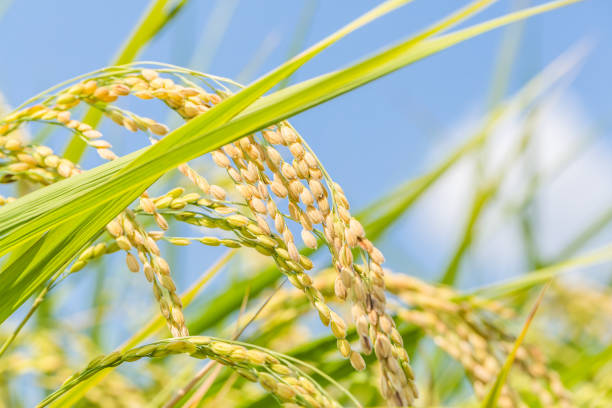 The cultivated rice plant is an annual grass and grows to about 1.2 metres (4 toes) in peak. It is an annual grass. 3, 5) As a rule, he eventually needs to take part my process, and so I give him a bit job that's relevant to what I’m doing. Sometimes I would leave him by the front door alone whereas I pretended to get some gadgets ready within the kitchen for our outing, in order to reduce stimulants and provides him a time to process (4). Other times not putting on sneakers was his method of expressing he wanted to remain residence and play with me. The rice button units the time to 12 minutes but it surely nonetheless turns out nice. It turned out unbelievable, I can barely discover a difference between the non-vegan and the vegan version. The panicle, which bears the fruit (on this case, the rice grain), pushes by the leaves and because it absolutely emerges, produces a flower that may be pollinated. The panicle, or inflorescence (flower cluster), is product of spikelets bearing flowers that produce the fruit or grain. The panicle, or inflorescence (flower cluster), is made up of spikelets bearing flowers that produce the fruit, or grain.
Stay tuned for next month’s post about the varieties of rice grains and the way rice goes from the seed of the rice plant to the grain you find in your market. Rice plants are frivolously dried in the solar following rainy situations or after harvest, and are threshed to take away the stems and leaves from the grains. They often employ trendy milling strategies and depend on controlled drying plants instead of on sun drying. See also listing of plants within the household Poaceae. How large do rice plants grow? In the 1960s the so-known as Green Revolution, an international scientific effort to diminish the menace of world hunger, produced improved strains of numerous food crops, including that referred to as miracle rice. The unprocessed, unrefined grains go on to be cleaned, polished and packaged earlier than they are used to create the numerous dishes human society all over the world depends on for nutrition and sustenance. Rice is an integral part of human meals tradition-regardless of where in the world you journey, rice is eaten in homes and eating places, as fundamental courses and as snacks, by rich and poor. Rice is such an integral part of the Zojirushi neighborhood, that we’ve planned a sequence of posts about this incredibly versatile and vital plant.
In arid zones, the plant survives as a perennial, producing new tillers following harvesting. During the vegetative state, the plant stem grows, changing into strong enough to help tillers - branches that develop from the main plant stem to bear grain-and leaves, which multiply every 3-4 days. The plant matures in phases over 3-6 months, from the vegetative state, to the reproductive state, to the ripening state. The grains ripen over the next three months, and when able to harvest, the whole plant is picked from the soil. Roots and shoots sprout from the seed, the order depending on what sort of soil the seed has been planted in. Wet circumstances will see the growth of the shoot first, in order that oxygen could be provided to the plant, whereas in dry circumstances, roots will emerge so that the plant can have a healthy provide of water. You will be tender and hold them, touch their face or rub their back, but simply say as little as doable.
댓글목록 0
등록된 댓글이 없습니다.